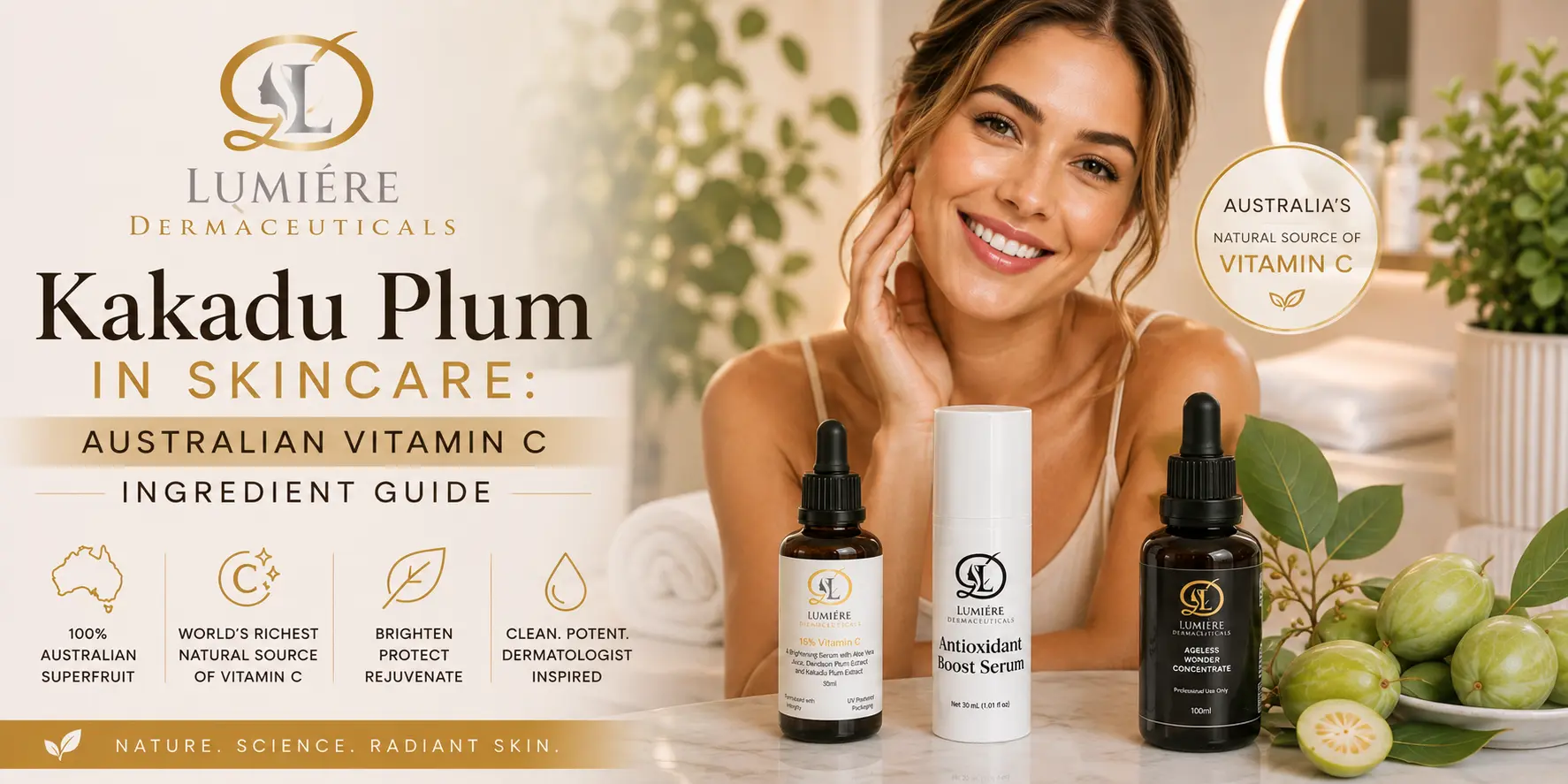
Kakadu Plum in Skincare: Australian Vitamin C Ingredient Guide
Long before vitamin C serums became a staple on bathroom shelves, a small green fruit was already doing the job in the Australian outback. Kakadu Plum has grown wild across the Northern Territory and parts of Western Australia and Queensland for tens of thousands of years, and Aboriginal communities have used it for both food and traditional medicine long before anyone put it in a dropper bottle.
Today it is one of the most talked about natural ingredients in skincare, and for good reason. Kakadu Plum happens to be the richest known natural source of vitamin C on the planet, which makes it a genuinely interesting alternative to synthetic ascorbic acid for anyone building an antioxidant skincare routine.
This guide covers where Kakadu Plum comes from, what it actually does for the skin, and how to bring it into a routine focused on brightness and collagen support.
What Is Kakadu Plum
Kakadu Plum, known botanically as Terminalia ferdinandiana, is a small native fruit that grows on trees across the tropical and semi-arid regions of northern Australia. It has a tart, tangy flavor and has been used by Aboriginal Australians for generations, both as a bush food and as a traditional remedy for wounds, headaches and other ailments.
What sets it apart from almost every other fruit used in skincare is its vitamin C concentration. Gram for gram, Kakadu Plum contains dramatically more vitamin C than oranges, and it is frequently cited as the highest natural source of vitamin C found anywhere in the plant kingdom. That single fact is why it has become such a sought after ingredient for anyone searching for an Australian vitamin C serum with a genuine local story behind it.
Why Vitamin C Matters for Skin
Vitamin C plays a well established role in skin health, and it is worth understanding why before looking at Kakadu Plum specifically.
Antioxidant protection. Vitamin C helps neutralize free radicals generated by UV exposure and pollution, which are two of the biggest contributors to premature aging in skin exposed to harsh climates like much of Australia.
Brightening. Vitamin C is widely used to help even out skin tone and reduce the appearance of dullness and dark spots, which is why it shows up in so many formulas targeted at uneven pigmentation.
Collagen support. Vitamin C is a required cofactor in the body’s natural collagen synthesis process, meaning skin genuinely needs it to build and maintain collagen effectively. This is part of why vitamin C is so often paired with anti-aging claims.
The challenge with vitamin C in skincare has always been stability. Pure ascorbic acid oxidizes quickly when exposed to air and light, which is why so many vitamin C serums are formulated with stabilizing ingredients or plant-based sources that behave differently on the skin.
What Makes Kakadu Plum Different From Synthetic Vitamin C
Lab-created ascorbic acid is effective, but it can be harsh on sensitive skin and tends to destabilize quickly once a bottle is opened. Kakadu Plum extract delivers vitamin C in a whole fruit form, alongside a natural profile of additional plant compounds, which tends to make it gentler and more bio-compatible for a wider range of skin types.
This does not mean Kakadu Plum is automatically superior in every formulation, since stability and delivery still depend heavily on how a product is made. What it does mean is that Kakadu Plum offers a genuinely different route to the same benefit, one rooted in a fruit that has supported skin and general health in Australia for a very long time.
Kakadu Plum and Collagen Support
Because vitamin C is essential to collagen production, ingredients rich in bioavailable vitamin C are a natural fit for any routine focused on firmness and elasticity. Kakadu Plum is often paired in formulas with peptides or other collagen-supporting actives, since the combination targets both the raw material the skin needs and the signals that encourage it to use that material.
For anyone building a routine around fine lines, loss of elasticity or general skin resilience, an antioxidant rich in vitamin C is one of the more evidence-backed places to start, alongside sun protection and a consistent retinoid or peptide step.
Bringing Kakadu Plum Into a Skincare Routine
Kakadu Plum extract typically appears in serums, where its lightweight, water compatible profile allows it to be layered easily under moisturizer. The Vitamin C Serum is formulated to brighten and refresh the complexion while reducing the appearance of dark spots, and works well applied to clean skin morning or night before heavier products.
For a more concentrated antioxidant approach, the Antioxidant Boost Serum combines Kakadu Plum extract with ferulic acid and resveratrol, a pairing that helps stabilize the vitamin C and extend its protective effect against daily environmental stress.
For a routine leaning more toward visible aging concerns, the Anti-Aging Serum pairs Kakadu Plum with peptides to support both brightness and firmness in the same step, which suits anyone who wants an antioxidant and a collagen-focused active without adding an extra product to their shelf.
Browse the full serums and oils range to compare formulas, or head to shop by skin concern if pigmentation and uneven tone are the primary focus.
Kakadu Plum in Professional Treatments
Kakadu Plum is not just a take-home ingredient. It also plays a role in professional facial treatments designed around brightening and antioxidant repair. A treatment that pairs a vitamin C rich serum with a soothing extract can address dullness and dark spots in a single session while setting the skin up to respond better to home care afterward.
If you are a clinic or salon interested in offering a Kakadu Plum focused facial, it is worth reviewing the available treatment menu for options built around this exact combination, or getting in touch through the professional page to discuss what would suit your client base.
Supporting the Skin After Treatment
Vitamin C treatments, particularly those combined with exfoliation or peels, can leave skin slightly more sensitive for a short period afterward. This is where a proper aftercare step matters. A gentle, hydrating post treatment product helps calm the skin and support the barrier while the antioxidant and brightening benefits continue to develop over the following days.
Getting Kakadu Plum Products for Your Clinic or Salon
If you are a practitioner or salon owner interested in stocking Kakadu Plum based formulas for your clients, the easiest starting point is our contact form, where our team can walk you through the range and help you build a routine around your client base. Clinics and stockists can also apply directly to become an authorised stockist to access wholesale pricing and ordering.
FAQ
What is Kakadu Plum and why is it used in skincare? Kakadu Plum is a native Australian fruit with the highest known natural vitamin C content of any plant. It is used in skincare for its antioxidant, brightening and collagen supporting properties.
Is Kakadu Plum better than regular vitamin C for the skin? It is not necessarily better, but it offers a gentler, whole fruit source of vitamin C that tends to suit sensitive skin types better than pure ascorbic acid, while still delivering meaningful antioxidant benefits.
Can Kakadu Plum help with dark spots and pigmentation? Yes. Its high vitamin C content supports a more even skin tone over time and is commonly used in formulas targeted at dullness and dark spots.
Does Kakadu Plum support collagen production? Vitamin C is a required cofactor for collagen synthesis in the skin, so ingredients rich in bioavailable vitamin C, including Kakadu Plum, support the skin’s natural collagen building process.
How often should I use a Kakadu Plum vitamin C serum? Most vitamin C serums, including formulas with Kakadu Plum, can be used once or twice daily, in the morning or evening, depending on the rest of your routine and how your skin responds.
Is Kakadu Plum suitable for sensitive skin? Generally yes, since its whole fruit profile tends to be gentler than synthetic ascorbic acid, though anyone with reactive skin should introduce a new vitamin C product gradually and patch test first.